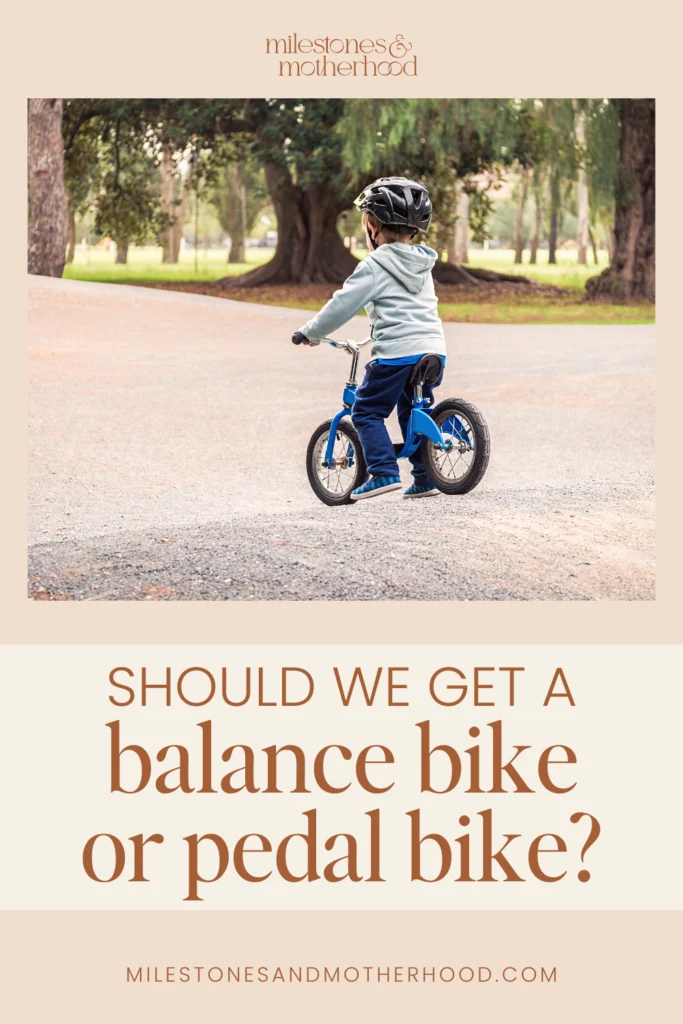
A Pediatric PT’s Thoughts On Balance Bikes
“Should I get a balance bike or a bike with pedals for my little one?”
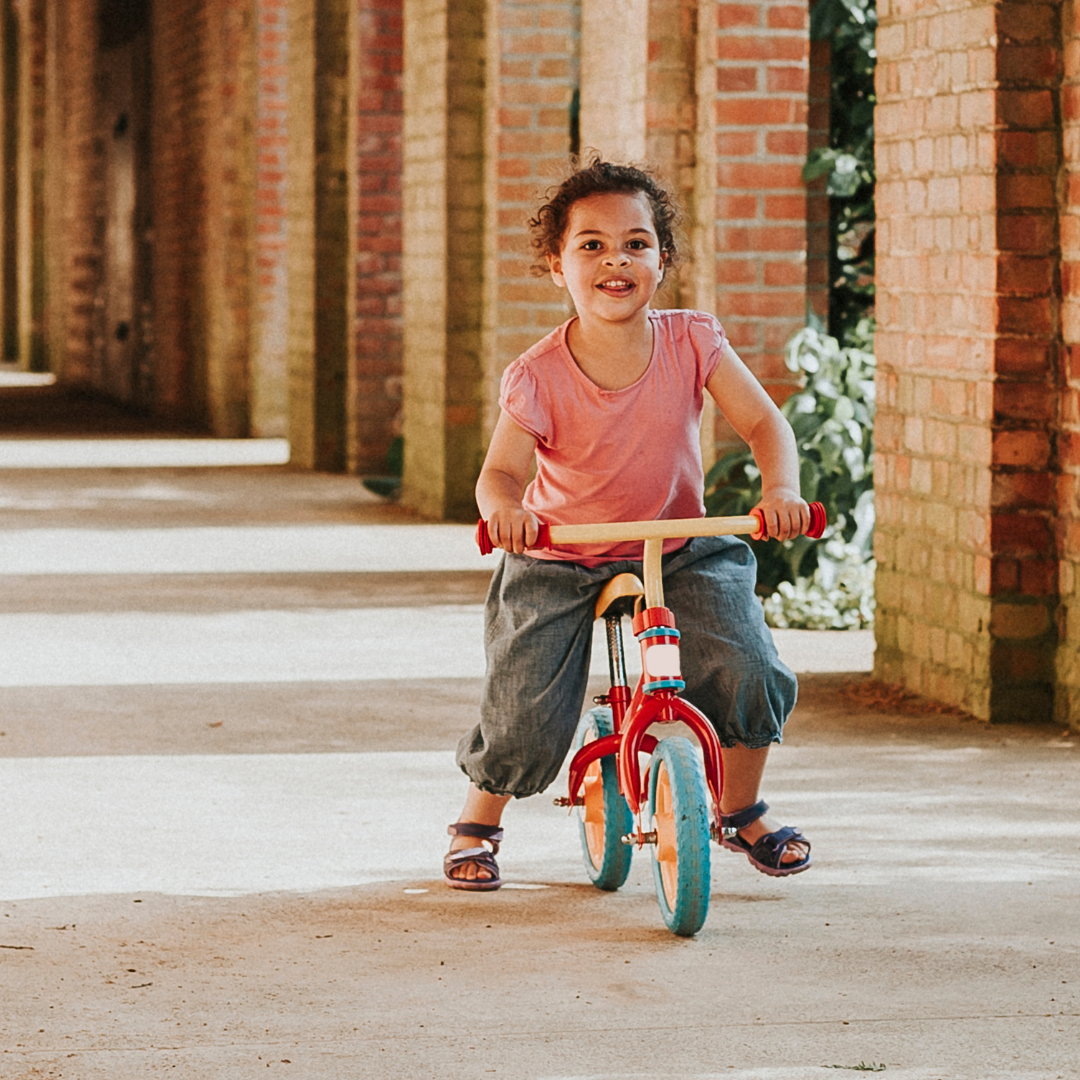
ANSWER: During the spring and summer seasons, I get this question and so many others about balance bikes for littles from a developmental perspective. Balance bikes are one of those things that have gained a lot of popularity – and they can be a GREAT option for some children, and not so much for others! Before sharing more, just know that if your child falls into the “not so much” group, that’s okay! You absolutely don’t NEED to use balance bikes to learn to ride a bicycle.
I LOVE balance bikes for younger kids, and I do think they hold so much value, but they are also EXPENSIVE! There are times when I would recommend skipping a balance bike all together or there are some options where you can attach pedals to it when a child is ready. Buying a balance bike with a pedal kit is a great option so you not only have the balance bike but also a bike with a pedal option. The longevity can be much more than a balance bike on its own!
Let’s go over some important things you should know before making a choice between a balance bike or a bike with petals for your little one.
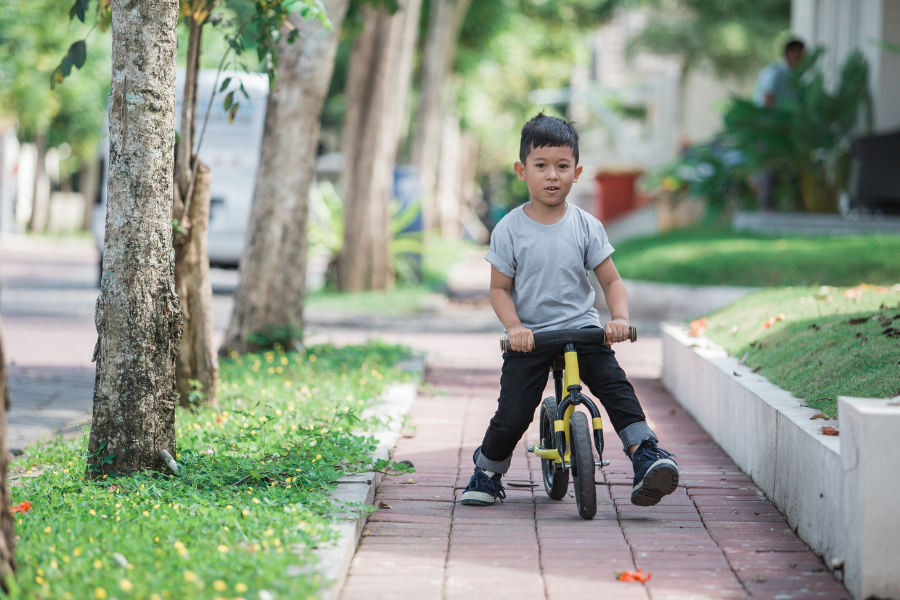
What are balance bikes, and how do they work?
Balance bikes are essentially a bicycle with NO pedals. They are ridden by the child using their feet to push along the ground, and aid in learning the balance and coordination required for traditional pedal bicycle riding (while also often by-passing the training wheels stage).
What aged children are balance bikes appropriate for?
So how do you know that your child is even developmentally ready for a balance bike? Balance bikes are typically introduced once a child is steadily walking independently. Independent walking is expected between 12-18 months of age, and typically a child becomes a steadier walker within 2-3 months of their first steps. In my experience, once they are a steady walker and have the ability to briefly stand on one leg to successfully get onto the bike, they’re good to start giving them a try!
I typically wait until they are independently walking to introduce them, but some can pair with a static rocker, like this, in which case you can introduce a little earlier if you’d like!
How do you introduce a balance bike?
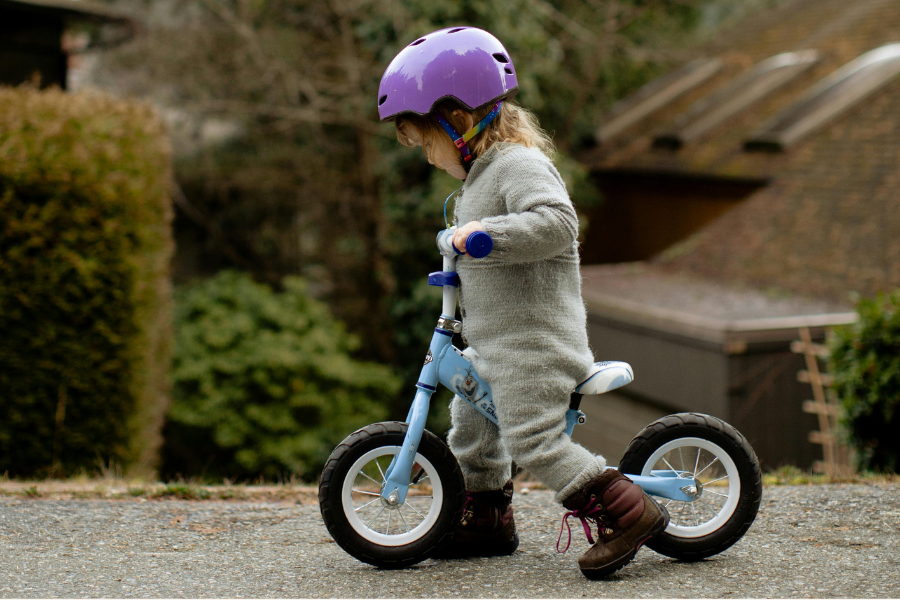
Once they are walking, I typically lower the seat ALL THE WAY down & just let them explore. At first, that sometimes looks like walking next to it, or trying to get their leg over it and get on – however they chose to explore is all good!
Then, I’ll often help them get one leg up & over so they can sit, and just let them stand there while still holding the balance bike upright, but reducing my support on it as they become more stable.
If they start to try to walk forward or push backward, I typically help just a bit to balance the bike (basically keep it from falling over on them, but let them still realize they will have to balance as you gradually reduce your support!).
& then I truly just follow their lead from there. I do try to avoid pulling them or pushing them while they lift their feet just because it can become more of a game for them than anything (haha!), but truly – don’t hesitate to follow your little one’s lead & adjust as they become more comfortable and proficient!
At what age is a child developmentally ready to ride a two-wheeler?
It really depends! Typically, it is expected for a child to be able to ride a two wheeled pedal bicycle between 5-7 years of age, though it is a very exposure based skill and can absolutely be seen earlier or a bit later depending on lots of variables.
What are the benefits of balance bikes from a developmental standpoint?
Similar to traditional pedal bicycle riding, using a balance bike requires/assists in developing balance, coordination, muscle strength, motor planning, confidence, and so much more. Typically, because they really allow a child to explore and learn the balance required to propel and steer it while maintaining their body upright & in midline, the transition to pedal bikes is often easier and bypasses the need for training wheels.
What are the benefits of balance bikes from a safety standpoint?
In general, balance bikes can be a great option from a safety and stability standpoint, as they are closer to the ground, typically very light weight, and your feet remain on the ground during use. For little ones that may be apprehensive or nervous with their feet off the ground on a bicycle with training wheels, they are definitely a great option!
Should helmets be worn on balance bikes?
Absolutely- an appropriately fitted helmet should be worn anytime a balance bike is used. If there’s one thing I will always be a stickler about, it’s protecting our babies’ sweet little noggins.
It only takes a moment to get that helmet on, and I know how easy it is to think, “they’re just riding on flat ground” or “this will only take a second.” But the reality is accidents happen in a split second, and almost always when we least expect them. So if you take nothing else from this blog, please take this: helmet, every single ride. Whether it’s a balance bike, pedal bike, scooter, or tricycle.
And not all helmets are created equal, so let’s talk about one feature you may see when shopping: MIPS. MIPS (Multi-directional Impact Protection System) helmets are designed to provide an extra layer of protection for the brain. Traditional helmets are built to protect against direct, straight-on impacts (think: falling straight down). But many real-life falls especially with kids happen at an angle.
MIPS helmets have a low-friction layer inside that allows the helmet to slightly rotate upon impact. This helps reduce rotational forces that can be transmitted to the brain during an angled fall forces that are associated with more serious brain injuries.
In simpler terms, non-MIPS helmets protect the skull from direct impact and MIPS helmets protect the skull and helps reduce the twisting forces on the brain during angled impacts. For most families, the key takeaway is simply choosing a helmet that includes MIPS for that added layer of protection.
At the end of the day, the best helmet is one that fits properly (snug, level on the head, not tipping forward/back), is worn consistently, meets safety standards and ideally includes MIPS for added protection.
You can find some of my favorite kid-friendly helmet options here 🤍
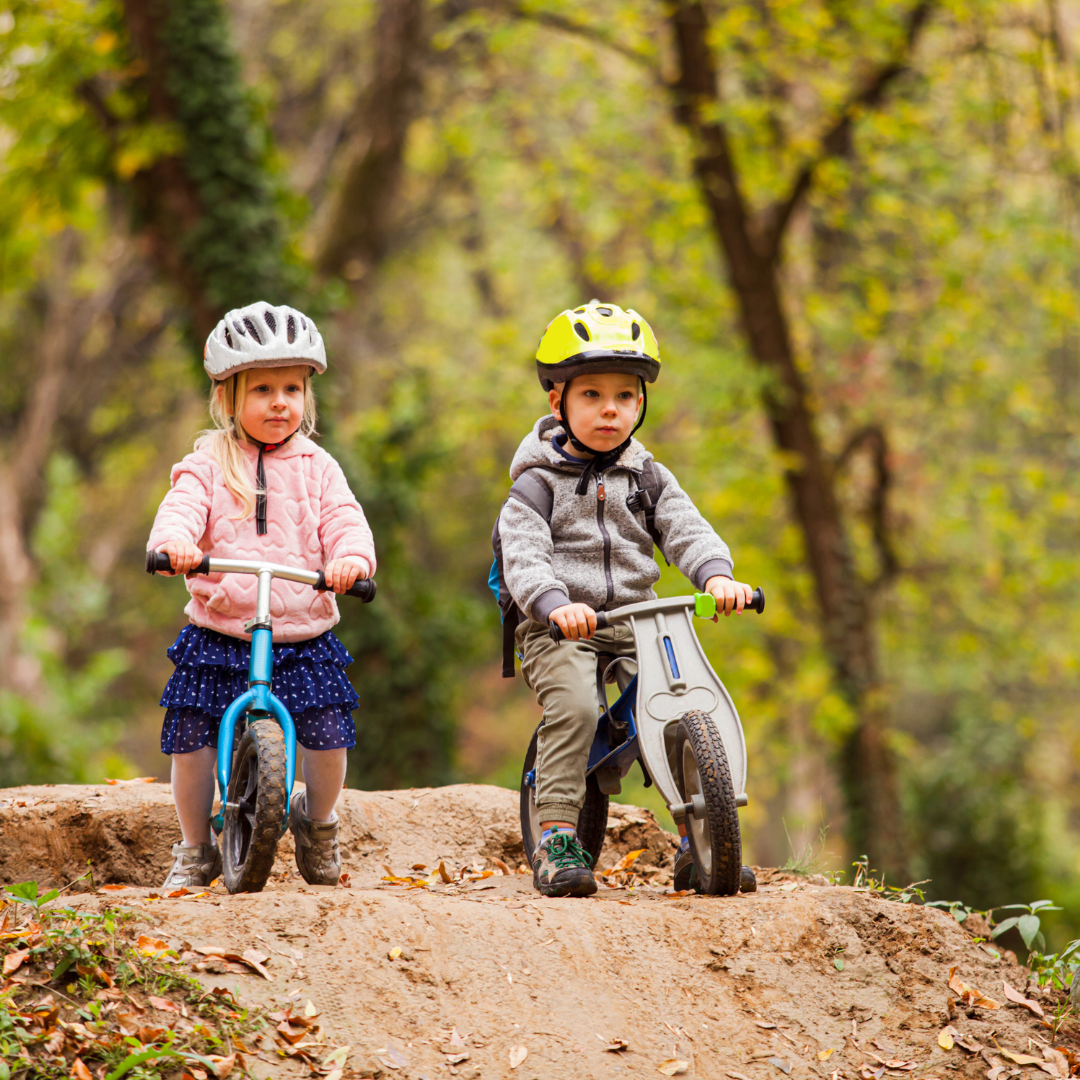
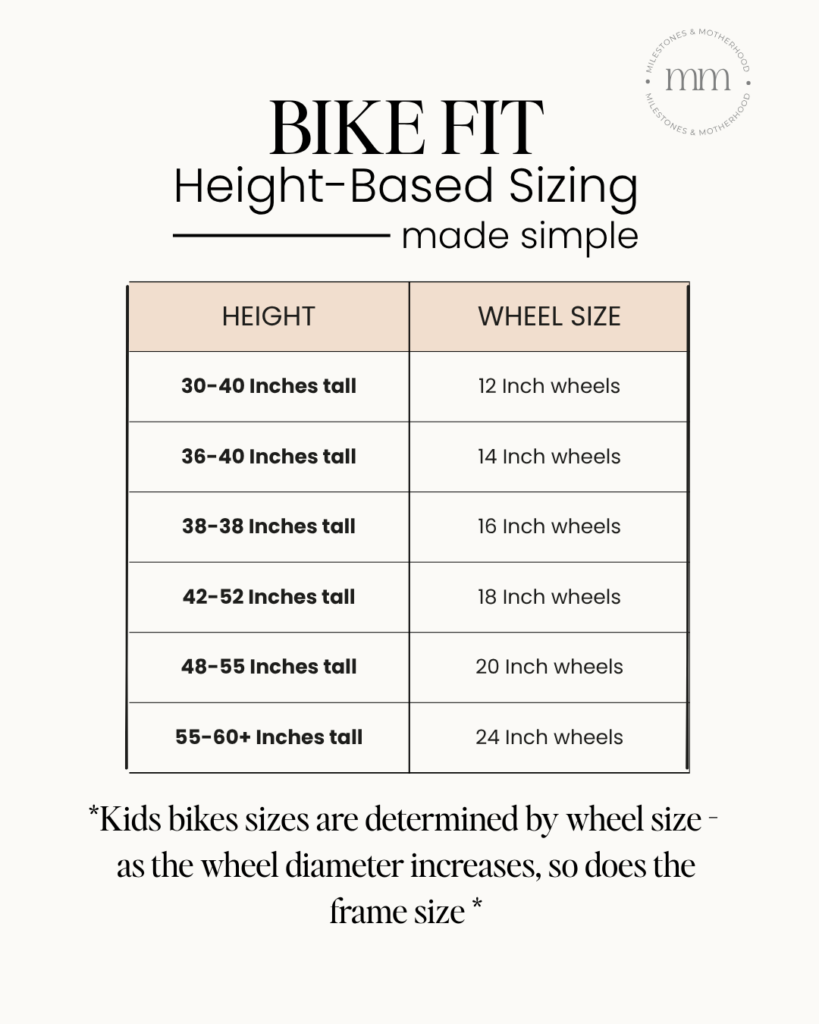
What features should you look for in a balance bike and why?
Most balance bikes have very similar features, but taking into consideration things like cost and your child’s size and weight are the biggest influencing factors in which bike you decide on. The middle bar of the bike should be low enough that a child can easily get their leg over it to get on/off the bike, and comfortably have their feet on the ground to propel with the entire surface of their feet. It should also ideally be light enough for them to easily maneuver it themselves without having to contend with the strength of holding up a heavy bike as well.
One feature that can be GREAT to consider is whether the balance bike comes with an option for adding on pedals (typically called a pedal conversion kit and is purchased separately), which gives much more longevity to their use. However, the options for balance bikes with add-on pedal kits are typically only for slightly older children, and the actual balance bike design in those is slightly different and a bit heavier, which can be difficult for younger/smaller children to be as successful with.
What about scooters?
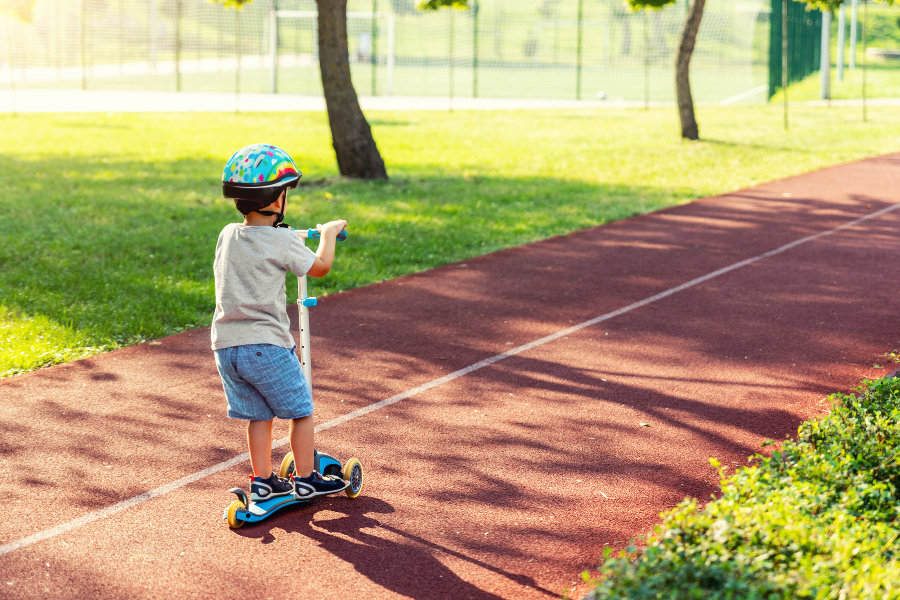
I love scooters for little ones for so many reasons, but single leg stance is probably the biggest! If you’ve been around awhile, you know I talk a ton about how functional and important it is for our little ones to be able to stand on one leg, especially as they work towards higher level milestones that require it – like stair climbing, hopping, skipping, kicking and more! And using a scooter is an awesome way to encourage exactly that. I personally prefer ones that will stand independently even if they’re not on it, like this, as it gives them a more stable base to work off of so they can focus on the actual motion and motor plan required to propel it, but there are lots and lots of super cute and fun options available to choose from!
Do you have any recommendations for best balance bike brands?
Check out my Favorite Bikes & Gear here! Or keep reading below for why I love each option!
OVERALL FAVORITE BALANCE BIKES
- Guardian Balance Bikes and Strider Balance Bikes are probably my top balance bikes so far! They have slightly different features/who they work best for, which is very important to consider!
FIRST BALANCE BIKES (18 MONTHS-2 YEARS)
- Strider is a great option here as well, and they also have a base you can use for pre-walking little ones that allows them to sit on it and get used to some of the motions they’ll encounter when using it!
- Guardian is always at the top of my list, their balance bike is a great option for little ones 18 months up to 4 years old!
- The Kriddo Balance Bike is also a good, lower cost option as well, though it is lighter and does not have a handbrake option.
- Early Rider is a great option for a first balance bike. The Super Velio balance bike is ideal for pre-walkers up to 2 years old! With a patented ABC (Active Balance Control System) this bike supports novice to advanced riders and every stage in between!
BEST TODDLER BALANCE BIKES (2-3 YEARS)
BEST PRE-K BALANCE BIKES (3-4 YEARS)
- Guardian and Strider here again! The Guardian Balance Bike has a steering limiter and handbrake, which are two features I find super helpful in making the transition from balance bike to traditional pedal bicycle.
BEST CONVERTIBLE BALANCE BIKES
- The Strider 14x sport is typically my go to for convertible balance bike options, as it has an add-on pedal conversion kit. However, it is definitely on the heavier & larger side, so slightly older children do better with it.
- Guardian bikes sized 14“-26” come with pedals but can ALL be converted into a balance bike- the pedals can be removed and the seat lowered!
BEST AFFORDABLE BALANCE BIKES (UNDER $100)
Choosing Between a Balance Bike & Pedal Bike For Your Child
Ultimately, if you are in an area where you really want your child to be able to pedal along with you and move a touch faster, a bike with training wheels is a great choice! If you’re okay with it taking a little longer and letting them work through it, a balance bike is awesome!
Balance bikes are more younger child friendly, because pedaling takes a lot of strength and coordination, even when training wheels are present. Regardless, no matter which route you go, they’ll have to learn to balance and pedal at some point anyway – so you really can’t go wrong! Hope that helps!
Looking for more ways to play AND support development?
Find simple, age‑appropriate play ideas from birth through early childhood with a clear breakdown of gross motor milestones.
The Milestones Playbook is designed to help you feel confident, grounded, and supported—so play stays joyful, not overwhelming.
Was this helpful? Save it for later!