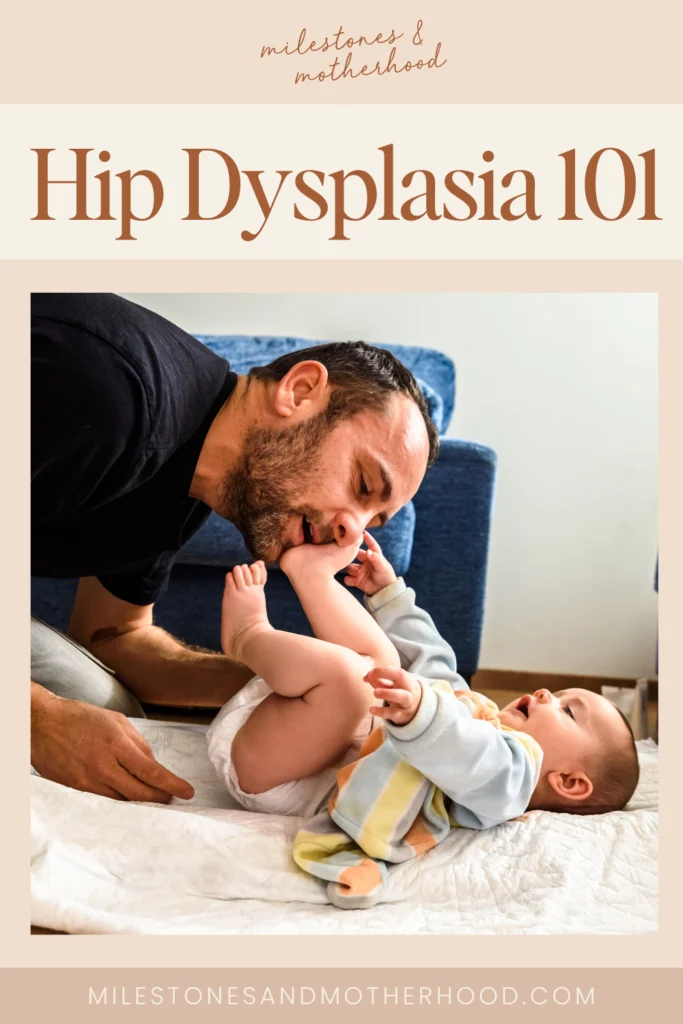
Hip Dysplasia in Infants: Causes, Signs & Treatments | A Pediatric PT’s Guide For Parents
As a pediatric physical therapist and mom of 3 myself, Hip Dysplasia is something I truly believe every parent NEEDS to have information on – because when it comes to hip dysplasia, earlier detection and treatment can make a world of difference!
So, let’s talk about – what is hip dysplasia in infancy, what causes it, how to identify it, and what we can do about it.

What Is Hip Dysplasia?
Hip dysplasia occurs when the two bones – femoral head & acetabulum, which create a ball-and-socket joint – don’t quite fit together properly.
In simple terms, hip dysplasia is present when the femoral head (aka the ‘ball’ at the top of the thigh bone) isn’t seated correctly in the acetabulum (aka the ‘cup’ of the pelvis). This can be present to varying degrees, but ultimately results in instability within the hip joint, which can then result in subluxing or dislocating of the joint.
A great resource for learning more about this condition is the International Hip Dysplasia Institute. They define it as “a general term for infantile hip instability, dislocation, or shallowness of the hip socket. Hip instability and dislocation are more likely to occur during infancy, while a shallow stable socket is more often discovered in adolescence or adulthood.”
Because the first 6 months of life are a huge period of hip joint development for a baby, it is important to ensure that we’re protecting baby’s hip development through proper positioning in things like baby carriers, swaddles, and providing as much free floor play as possible.
Contributing Factors, Diagnosis & Treatment of Hip Dysplasia
Potential Contributing Factors of Hip Dysplasia
- Breech babies (in-utero positioning)
- Family history of hip dysplasia
- Low muscle tone
- Overly restrictive swaddling of the hips/legs straight down
- Excessive supported standing with legs/hip straight down (similar to the swaddled position mentioned above) prior to a child being able to stand on their own
Signs of Hip Dysplasia In Babies and Children
Before going into common signs of hip dysplasia, please note that this is not an all inclusive list – nor does this list diagnose your child with hip dysplasia. If your child is showing any of the common signs below, please bring that to your pediatrician’s attention.
SIGNS OF HIP DYSPLASIA IN INFANCY
- Clicking of the hips when performing specific testing (done by medical professionals) and/or noted by parents during diaper changes is often the first sign
- Asymmetrical folds of the butt
- Differences in leg length
SIGNS OF HIP DYSPLASIA AFTER INFANCY
- Limping
- Difficulty weight bearing
- Pain in the hips and/or low back
- Arthritis in adulthood
How does a baby or child get diagnosed with hip dysplasia?
Typically after potential hip dysplasia is identified, referral for imaging is made.
- If a child is UNDER 6 months of age, referral for a hip ultrasound is often given.
- If a child is NEAR or OVER 6 months of age, a referral for a hip x-ray is often done.
My child has hip dysplasia, now what?
- Monitoring
- Bracing
- Casting
- Surgery in extreme cases
The Impact of Proper Positioning
Considerations For Baby Wearing, Swaddling & Baby Container Use
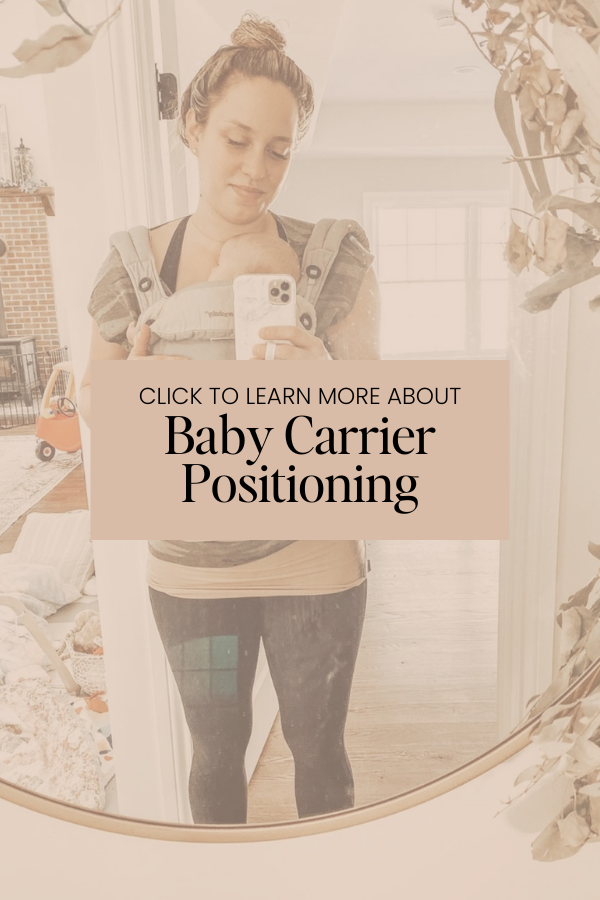
To promote hip health when baby-wearing, we want baby facing you (not outwards), and to aim for the legs to be in what is referred to as the “M” position. Think of the bottom points of the M being the feet (on either side), and their bottom (in the middle). The upper points of the M would be their knees. An image of this description can be found here.
This positioning encourages the most congruent position of the thigh bone and hip (which make up the hip joint), and supports healthy hip joint development.
Similarly, when swaddling a baby, it’s important to be sure the legs can move freely and the swaddle is not Tight around the hips. This ensures baby is able to move legs freely within them, which often results in resting in hip & knee flexion with legs slightly apart (abduction), which is a natural position in infancy that supports ideal hip alignment & development.
Finally, standing baby “containers” like exersaucers, sit in walkers & jumpers force the legs to be straight down into extension and adduction. This leg position is the opposite of the ideal hip position described above, which is why in general, it is recommended to avoid use of standing ‘containers’ in the first 6-7 months of life &/or until baby is able to rise into standing on their own. These containers also place undue stress on the developing joints when used before a child is able to get into standing independently, which is the skill that demonstrates they have laid the foundational skills & strength needed to protect those joints against the forces of standing. For more on baby containers, including my preferred options & guidelines for use, as a pediatric PT and mom of 3 that deeply understands the need for baby containers (in moderation!) and believes they CAN be used safely in moderation – check out this blog!

More Information on Hip Dysplasia
We’ve outlined how hip dysplasia in infancy is detected, diagnosed, treatment options, AND how to position in a way that encourages healthy hip development – now, here are some final tips to keep those precious baby hips healthy!
- The International Hip Dysplasia Institute has an amazing, extensive (though not all inclusive) reference of Hip Healthy Products (baby carriers and swaddles).
- If you have any questions or concerns (including noting any clicking or clunking of baby’s hips), don’t ever hesitate to speak with your pediatrician.
- Refer to this collaborative post with Expecting and Empowered on babywearing for more alignment AND posture for parents while babywearing.
- Check out my post on exersaucers and general guidelines for standing containers for babies.
- Looking for an exersaucer for your baby? You can find my favorites here.
- Learn more about when babies should be bearing weight through their legs in this post.
- Read BioMedical’s article Hip Joint: Embryology, Anatomy, and Biomechanics.
I truly hope this information helps empower you with knowledge about hip dysplasia, supporting hip health, and as always – if you have any concerns or questions about your child’s development, don’t hesitate to speak with your healthcare team!
Looking for More Developmental Resources?
For developmental questions, tips and guidance related to milestones about tummy time, rolling & sitting, crawling and walking, check out KC’s developmental Masterclasses linked here.
Was this helpful? Save it for later!